


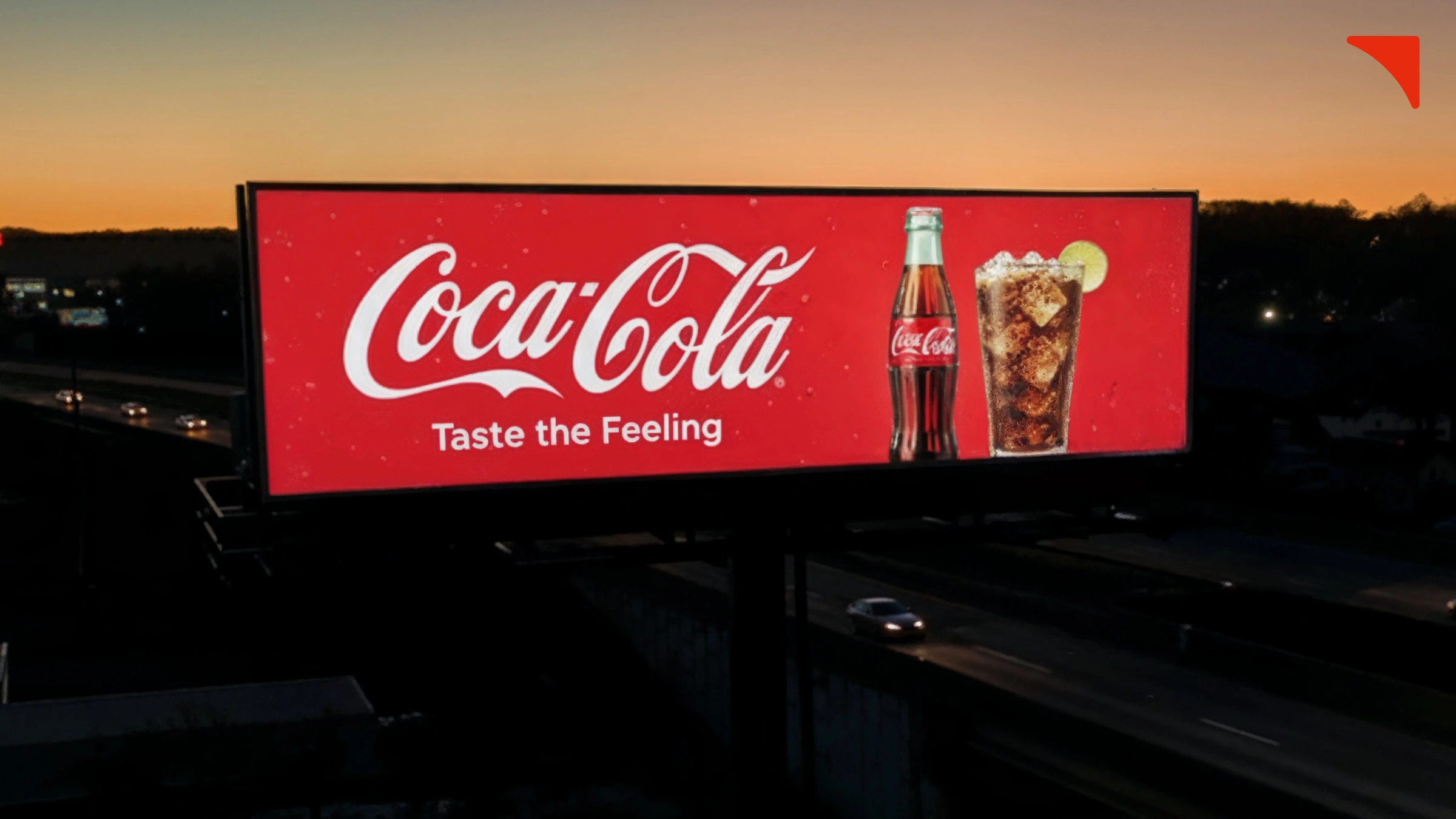
Digital billboards give brands the opportunity to advertise on prominent screens across roadsides, shopping districts and busy city centres. However, the success of a campaign depends on how quickly people can recognise the brand and understand its message.
Effective digital billboard creative should use one clear message, bold imagery, readable typography and prominent branding. The design must also suit the screen’s size, viewing distance, display duration and surrounding environment.
Here are the key principles for designing digital billboard adverts that work in real world settings.
1. Start With One Clear Message
A digital billboard may only be visible to someone for a few seconds. Trying to communicate several benefits, offers or product details in one advert can make the message difficult to understand.
Start by deciding what the audience should remember.
For example, a retailer launching a sale might use:
Up to 40% Off Selected Styles
Sale Now On
Brand Logo
This communicates the offer without requiring the audience to read several lines of supporting information.
For brand awareness campaigns, a distinctive product image and short headline may be enough. For a store opening, the location and opening date could take priority.
A useful test is whether someone unfamiliar with the brand can understand the main message after a brief glance.
2. Use Large, Readable Typography
Text that looks clear on a laptop may become difficult to read when displayed several metres above a road.
Digital billboard typography should be designed for the actual viewing distance.
Use large headlines, simple typefaces and sufficient spacing between words. Avoid thin fonts, lengthy sentences and small supporting copy.
For roadside creative, aim for a short headline of approximately five to seven words where possible. This is a practical design guideline rather than a strict industry requirement.
The final font size should be assessed against the screen’s dimensions, resolution and viewing environment.
3. Choose High Contrast Colours
Colour contrast helps separate the message from the background.
Dark text on a light background, or light text on a dark background, can improve readability when the contrast is strong enough.
Avoid combinations that make letters difficult to distinguish, particularly when the advert is viewed from a distance.
Digital screens also produce their own light, so colours can appear different from printed artwork.
Bright colours may become especially intense on large LED displays. Check how the design appears under daytime and evening viewing conditions.
Our guide to colour psychology in billboard advertising explains how colour choices can influence visibility and audience perception.
4. Make the Brand Immediately Recognisable
Branding should be visible without overwhelming the main creative.
Place the logo where it remains easy to identify and ensure it has sufficient contrast against the background.
Established brands may use distinctive colours, packaging or product imagery to support recognition. Less familiar brands may need a larger logo or clearer brand name.
Avoid leaving branding until the final frame of an animation. If viewers see only part of the advert, they should still be able to identify the advertiser.
5. Design for the Billboard’s Location
Digital billboard creative should reflect where the screen is positioned and how people approach it.
Roadside Digital Billboards
Roadside screens are viewed by people travelling in vehicles, often with limited time to read.
Use short headlines, large imagery and a simple layout. Avoid detailed product descriptions or messages that require prolonged attention.
Motion may be restricted or prohibited on roadside screens, depending on the location and operator requirements.
City Centre Digital Screens
Screens in shopping districts and pedestrian areas may offer longer viewing opportunities.
These locations can support product imagery, retail promotions and location specific messages.
For example, a restaurant could advertise a nearby branch with an accurate walking distance.
Digital Screens in Shopping Centres
Shopping centre screens reach people already visiting retail destinations.
Brands can use these placements to highlight store locations, new collections and relevant promotions.
A campaign encouraging store visits should make the next action clear.
Choosing the right billboard advertising formats is important because screen proportions, viewing conditions and audience behaviour vary between locations.
6. Use Animation Only When It Improves the Message
Some digital billboards support animation or video, while others require static creative.
Where motion is permitted, it should have a clear purpose.
For example, a product could rotate slightly to reveal its design, or a simple transition could introduce a promotional message.
Avoid fast transitions, flashing effects and complicated sequences that require viewers to watch the entire advert.
A useful approach is to make each important frame understandable on its own.
This is particularly relevant when the creative appears within a shared advertising loop and audiences may begin watching at different points.
7. Adapt Creative to the Screen’s Dimensions
Digital billboards come in different shapes and sizes.
A wide roadside LED screen requires a different layout from a portrait digital 6-sheet or a large curved display.
Simply resizing the same artwork can result in cropped products, poorly positioned logos or text that becomes too small.
Prepare separate creative versions where necessary.
For example, a landscape screen may place the product on one side and the headline on the other. A portrait screen may work better with the product above the headline.
The campaign should retain consistent branding while adapting the composition to each format.
8. Consider the Advert’s Display Duration
Digital billboard advertisements often appear in short slots within a rotating loop.
A screen may display creative for approximately 10 seconds, although actual slot lengths vary by operator and site.
The message should be understandable within the available viewing time.
For a static creative, this means limiting the amount of information.
For animated creative, the opening frame should establish the brand and message quickly. Avoid long introductions or sequences that reveal the main offer only at the end.
The approved slot length should be confirmed before animation begins.
9. Use Dynamic Creative for Relevant Campaigns
One advantage of digital billboard advertising is the ability to change creative during a campaign.
Where the screen network supports it, brands can schedule different messages according to time, location or other approved triggers.
For example:
- Restaurants: Breakfast promotions in the morning and dinner offers later in the day.
- Retailers: Different messages for weekday shopping and weekend sales.
- Entertainment brands: Updated creative as an event or release date approaches.
- Travel brands: Destination messages suited to the season or weather conditions.
Dynamic campaigns require careful planning. Each creative version should remain clear and consistent with the wider brand identity.
10. Prepare Artwork to the Correct Technical Specifications
Before submitting digital billboard creative, request the technical specifications for every screen.
Requirements vary between media owners, networks and individual displays.
The creative brief should confirm:
- Pixel dimensions: The exact resolution required for each screen.
- Aspect ratio: The width to height proportions of the display.
- File format: Approved formats such as JPEG, PNG or MP4, depending on the screen.
- File size: Maximum permitted file size.
- Display duration: The length of each advertising slot.
- Frame rate: Required settings for video or animation, where permitted.
- Safe areas: Any margins needed to keep text and logos visible.
- Content restrictions: Rules covering animation, brightness and advertising claims.
Do not assume that all digital billboards use the same specifications.
For UK campaigns, creative must also comply with applicable advertising standards and the media owner’s approval requirements.
11. Test the Creative Before Launch
A digital billboard design should be reviewed at a scale and distance that reflect the intended placement.
Ask someone unfamiliar with the campaign to view the artwork briefly.
Can they identify the brand? Do they understand the message? Is the offer or call to action clear?
Testing should also check whether the artwork remains readable against different backgrounds and lighting conditions.
Where possible, request a screen mock up or proof from the media owner before final approval.
Our guide to billboard advertising creative best practices covers further considerations for designing artwork around viewing distance and outdoor environments.
Common Digital Billboard Design Mistakes to Avoid
Even visually impressive creative can become ineffective when the message is difficult to understand.
Common mistakes include:
- Adding too much text to one frame.
- Using small or decorative fonts that are difficult to read.
- Placing logos against low contrast backgrounds.
- Designing animations that depend on viewers watching every frame.
- Reusing social media artwork without adapting the layout.
- Including QR codes on roadside screens where drivers should not interact with them.
- Submitting artwork without checking the screen’s technical requirements.
Addressing these issues before production can reduce approval delays and improve the clarity of the final advert.
Design Your Digital Billboard Campaign With OOH International
Effective digital billboard creative begins with a clear message and an understanding of where the advert will appear.
The right combination of imagery, typography, branding and screen specific design helps audiences recognise and understand the campaign quickly.
At OOH International, we help brands plan billboard advertising campaigns across the UK, selecting suitable locations and formats for their objectives.
Whether you’re preparing a product launch, retail promotion or brand awareness campaign, get in touch with our team to discuss your creative requirements and available digital billboard locations.