


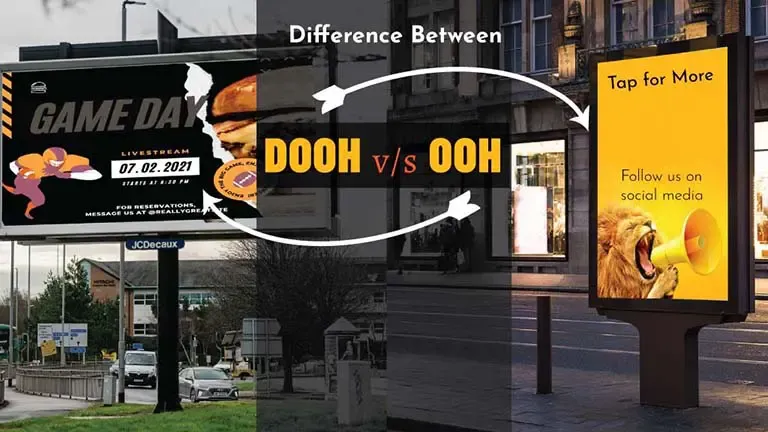
For brands planning OOH ads, the choice between traditional OOH and digital out of home advertising is not always straightforward. Both formats can deliver scale, visibility and real-world impact, but they work in different ways and suit different campaign objectives.
Traditional out of home advertising in UK markets still plays a major role in brand building, especially where advertisers want strong physical presence across roadside, transport, retail, airport and city-centre environments. At the same time, outdoor advertising in UK campaigns are increasingly being planned with digital screens, data-led buying, contextual scheduling and flexible creative rotation in mind.
The smartest campaigns rarely treat OOH and DOOH as separate choices. Instead, they look at how each format can support the wider media plan. A static roadside billboard can create long-term memory and geographic dominance, while a digital screen can react to time of day, audience movement, weather, events or retail patterns. For brands scaling across multiple cities or markets, the question is not simply which format is better. It is which format delivers the right message, in the right place, at the right moment.
What does OOH mean
OOH stands for out of home advertising. It covers media seen by people when they are outside their homes, moving through public spaces, commuting, shopping, travelling or socialising. This includes billboards, bus advertising, taxi media, airport advertising, rail formats, London Underground panels, shopping centre screens, street furniture, roadside posters and other real-world placements.
Traditional OOH is usually associated with printed or static formats. These can include classic 6 sheets, 48 sheets, large-format billboards, transport wraps and posters in high-footfall environments. For advertisers considering billboard advertising in the UK, traditional OOH remains a strong route into mass awareness because it provides consistent, unavoidable visibility in specific locations.
Its strength lies in presence. A well-positioned billboard on a major commuter route, a transport campaign across a busy city, or a large-format site near a retail destination can keep a brand visible repeatedly over days or weeks. This repeated exposure is useful for brand fame, product launches, event promotion, destination marketing and market entry campaigns.
What does DOOH mean
DOOH stands for digital out of home. It is a digital version of OOH advertising, delivered through screens rather than printed panels. These screens may appear on roadside billboards, shopping centre networks, airport concourses, transport hubs, retail environments, gyms, hospitality venues or city-centre landmarks.
The core advantage of digital out of home advertising is flexibility. Creative can be changed without reprinting. Campaigns can run by time slot. Messaging can be adapted by location, audience pattern or context. In some cases, buying can be activated programmatically, allowing advertisers to use data signals to decide when and where ads are shown.
For international advertisers, DOOH is especially useful where campaigns need localisation. A global brand may want the same core creative platform across several markets, but with different languages, price points, cultural references or calls to action by country. Digital screens make this easier to manage, particularly when a campaign needs to adapt quickly.
The main difference between OOH and DOOH
The main difference is delivery. OOH usually refers to traditional printed outdoor media, while DOOH refers to digital screen-based outdoor media.
That difference affects how campaigns are planned, bought, produced and measured. A traditional OOH campaign often involves fixed locations, printed production and set display periods. DOOH can offer more dynamic scheduling, shorter bursts, creative variation and data-informed activation.
This does not make DOOH automatically better. Static OOH can provide strong ownership of a physical location. It also works well where long dwell time, repeated journeys and simple brand messaging are important. DOOH performs well when the campaign needs agility, multiple creative messages or contextual relevance.
A practical way to think about the difference is this: traditional OOH is built for sustained presence, while DOOH is built for flexible presence. Both can deliver reach. Both can drive attention. The right choice depends on what the brand needs the media to do.
When traditional OOH works best
Traditional OOH works well when a campaign needs broad visibility, repeated exposure and a strong sense of physical scale. A static billboard, bus side or underground poster can hold a message in place for a defined period, giving audiences repeated opportunities to see and remember it.
This is particularly valuable for brand awareness campaigns, local market launches, retail openings, event promotion, political and public information campaigns, tourism campaigns and high-frequency commuter targeting. If a brand wants to dominate a specific route, neighbourhood or transport network, static OOH can provide a level of consistency that is hard to replicate through digital channels alone.
Traditional formats are also well suited to simple creative. A strong headline, distinctive visual identity and clear brand mark can work powerfully when displayed at scale. Outdoor creative does not need to explain everything. It needs to be seen, understood and remembered quickly.
For international campaigns, traditional OOH can also signal market commitment. A brand appearing on premium roadside billboards, airport media or landmark city locations can create a sense of credibility and arrival. This is important for companies entering a new country, promoting tourism destinations, launching entertainment properties or building trust with local audiences.
When DOOH works best
DOOH works best when a campaign needs flexibility, speed and context. Because screens can display multiple creative assets, advertisers can use different messages throughout the day or tailor creative to audience behaviour.
A coffee brand, for example, might promote breakfast messaging in the morning and iced drinks in the afternoon. A travel brand might change creative based on seasonal booking windows. A retailer might promote different products depending on proximity to stores. A financial services brand might use DOOH around commuter hubs during peak business travel periods.
DOOH also supports more responsive campaign management. If a product sells out, an offer changes or a campaign needs to react to an event, digital creative can be updated more quickly than printed media. This makes it useful for entertainment releases, retail promotions, sports campaigns, weather-led messaging and time-sensitive launches.
For brands interested in automated buying, programmatic outdoor advertising can add another layer of control. Programmatic DOOH can allow advertisers to activate campaigns using selected triggers, audience data or buying parameters. This can be useful across large screen networks where timing and relevance are central to performance.
Creative differences between OOH and DOOH
OOH and DOOH both need clear creative, but the way the creative is used can differ.
Traditional OOH normally relies on one strong message. Since the creative remains fixed, the concept needs to work across the whole campaign period. It should be simple, memorable and visually distinctive. The best static OOH often uses restraint: a short line, strong branding, bold imagery and enough negative space to make the message readable at speed.
DOOH allows more variation, but that does not mean the creative should become complicated. Digital screens still operate in public spaces where attention is limited. The advantage is that advertisers can create a suite of related executions. These might vary by time, city, audience mindset or campaign stage.
A strong DOOH campaign may use motion, sequencing or dynamic creative, but the message still needs discipline. Movement should help comprehension, not distract from it. A digital billboard that tries to behave like a full online video can lose impact if the audience only has a few seconds to process it.
Targeting and planning considerations
Both OOH and DOOH rely heavily on location planning. The quality of the site matters. So does the audience using that environment. A high-impact site is not just a large format. It is a location where the right people are likely to see the message in the right mindset.
For UK and international campaigns, planning should consider commuter flows, transport networks, retail behaviour, airport passenger profiles, tourist routes, local events, cultural context and competitor presence. A campaign in London may require a different format mix from one in Manchester, Dubai, New York, Berlin or Singapore. Even within one city, audience behaviour can change dramatically by district.
Traditional OOH planning often focuses on reach, frequency, location quality and campaign duration. DOOH planning adds timing, screen network behaviour, creative rotation and contextual triggers. This makes the planning process more detailed, but also more adaptable.
For multi-market campaigns, local knowledge becomes critical. The same media format can perform differently across countries because of commuting habits, regulation, screen availability, language, cultural norms and city infrastructure. A strategic OOH partner can help advertisers avoid generic planning and build campaigns around how people actually move through each market.
Cost differences between OOH and DOOH
The cost of OOH and DOOH depends on location, format, campaign duration, production, demand, seasonality and market. Premium landmark sites cost more than smaller local placements. Airport and major city-centre environments often command higher rates because of audience value and limited inventory.
Traditional OOH may include print production and installation costs. These costs can make it less flexible once live, but the format can offer strong value over longer display periods. If a brand wants a message to remain visible in one place for several weeks, static OOH can be efficient.
DOOH usually avoids print production but may have different pricing based on screen quality, impressions, time slots, share of voice or programmatic conditions. It can be useful for shorter campaign bursts or phased creative, although premium digital screens in major environments can carry higher media costs.
The real question is not which format is cheaper. It is which format provides stronger value for the campaign objective. For long-term brand presence, static OOH may be the better investment. For time-sensitive, location-specific or context-led messaging, DOOH may justify a higher rate because of its flexibility.
Measurement and performance
OOH measurement has developed significantly. Campaigns can be assessed using reach and frequency estimates, audience movement data, location analysis, footfall patterns, brand uplift studies, QR codes, search uplift, web traffic changes, store visitation and sales correlation where appropriate.
DOOH can add more detailed reporting around plays, impressions, time slots and delivery conditions. Programmatic DOOH may also offer additional campaign controls and reporting, depending on the buying platform and media owner.
However, advertisers should be careful not to judge OOH purely like a click-based channel. Outdoor media often works by building memory, trust, familiarity and physical availability. It supports brand search, direct traffic, social amplification and retail action, but its value is not always captured by last-click attribution.
The best measurement approach starts with the campaign objective. A brand awareness campaign should not be judged by the same metrics as a local store opening. A tourism campaign may need market-level response indicators. A retail campaign may need footfall analysis. A B2B airport campaign may focus on audience quality and brand perception.
Should brands choose OOH or DOOH
Brands should choose OOH when they want high-impact, sustained physical presence in specific environments. They should choose DOOH when they need flexibility, dynamic messaging or contextual activation. Many campaigns benefit from using both.
A launch campaign might use large static billboards to create market presence, supported by DOOH screens in transport hubs to deliver time-sensitive messaging. A retail campaign might use static roadside formats near stores, with digital screens promoting specific offers by daypart. An international campaign might use traditional OOH for landmark visibility and DOOH for localised language or market-specific creative.
The most effective choice comes from matching format to objective. If the goal is fame, dominance and long-term visibility, traditional OOH should be strongly considered. If the goal is agility, relevance and creative variation, DOOH has clear advantages. If the goal is scale across multiple markets, a blended approach often provides the strongest result.
Building a smarter OOH and DOOH campaign
A strong campaign starts with the audience, not the format. Before choosing billboards, transport media, airport screens or programmatic digital panels, advertisers should define who they need to reach, where those people move, what mindset they are in and what action the campaign should influence.
From there, media planning can identify the right mix of formats. Static OOH may anchor the campaign in key locations. DOOH may add flexibility and timing. Transport media may build frequency across commuter journeys. Airport advertising may reach business travellers, tourists and affluent audiences. Large-format billboards may create fame and visual authority.
OOH International supports campaigns across these environments, helping brands and agencies plan outdoor media with local knowledge, premium inventory access and international execution capability. For advertisers comparing OOH and DOOH, the opportunity is not simply to pick a format. It is to build a media plan that uses real-world attention properly.
Brands looking to explore outdoor media across the UK or multiple international markets can speak to the OOH International team through the contact page for planning support, format recommendations and market insight.
FAQs
What is the difference between OOH and DOOH advertising
OOH advertising refers to out of home media seen in public spaces, including billboards, bus ads, airport media, taxi advertising and transport posters. DOOH is digital out of home advertising, which uses digital screens rather than printed formats. OOH is often better for fixed, long-term presence, while DOOH is better for flexible and dynamic messaging.
Are ooh ads still effective compared with digital screens
Yes. OOH ads remain effective because they deliver large-scale visibility in real-world environments. Static formats can build strong brand recall through repeated exposure, while digital screens add flexibility and contextual relevance. The strongest campaigns often combine both formats.
Is DOOH more expensive than traditional out of home advertising in UK campaigns
DOOH can be more expensive in premium locations or high-demand time slots, but costs vary widely by screen, market, duration and buying model. Traditional out of home advertising in UK campaigns may include production and installation costs, while DOOH usually offers more flexibility once live.
When should a brand use Outdoor advertising in UK campaigns
Brands should use outdoor advertising in UK campaigns when they want to reach people in high-footfall, commuter, retail, roadside or transport environments. It is useful for launches, brand awareness, regional targeting, retail support, event promotion and multi-city visibility.
Is billboard advertising in UK still useful for modern brands
Yes. Billboard advertising in UK campaigns remains useful because they offer scale, visibility and strong location-based impact. Digital media has changed how campaigns are planned, but billboards still play an important role in building brand fame and real-world presence.