


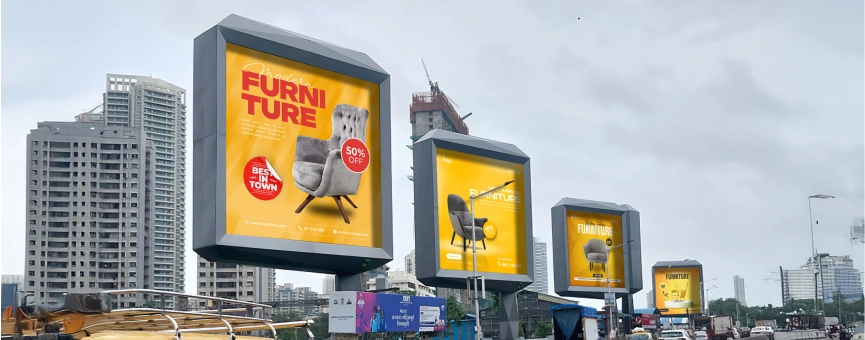
Out-of-Home (OOH) advertising refers to any advertising that reaches people when they are outside their homes. It is one of the oldest and most effective forms of advertising because it targets audiences in public spaces such as roads, transport systems, malls, airports, and entertainment venues. With the rise of digital technology, OOH has evolved into more dynamic and interactive formats. Below are the main types of OOH advertising explained in a simple and structured way.
1. Billboards Advertising
Billboards are the most traditional and widely recognized form of OOH advertising. They are large outdoor structures placed in high-traffic areas such as highways, busy streets, and city centers.
There are two main types:
- Static billboards: Printed posters that remain fixed for a set period.
- Digital billboards (DOOH): LED screens that can display multiple ads and change content dynamically.
Billboards are effective because they offer high visibility and repeated exposure to commuters. They are especially useful for brand awareness campaigns.
2. Transit Advertising
Transit advertising refers to ads placed on or inside public transportation systems. This type of OOH reaches people during their daily travel routines.
Common formats include:
- Ads on buses, taxis, and ride-hailing vehicles
- Interior and exterior train and metro advertisements
- Branding inside stations and platforms
- Airport advertising in terminals, lounges, and baggage claim areas
Transit advertising is powerful because it targets a captive audience. Many brands also use bus advertising and taxi advertising campaigns to maximize visibility across busy urban routes.
3. Street Furniture Advertising
Street furniture advertising uses public infrastructure as advertising space. These are everyday objects that people interact with regularly in urban environments.
Examples include:
- Bus shelters
- Benches
- Lamppost banners
- Kiosks and information boards
This type of advertising is effective because it is placed at eye level and often located in pedestrian-heavy areas. It helps brands stay visible throughout a person’s daily movement in the city.
4. Digital Out-of-Home (DOOH) Advertising
Digital Out-of-Home (DOOH) is the modern version of traditional OOH advertising. It uses digital screens to display advertisements in real time.
Key features of DOOH:
- Dynamic content that can change based on time, weather, or audience
- High-quality video and animation
- Programmatic advertising (automated ad buying and targeting)
DOOH can be found in malls, airports, highways, elevators, and commercial buildings. Airport advertising through digital screens is especially effective for reaching premium and international audiences.
5. Place-Based Advertising
Place-based advertising targets audiences in specific locations where they spend time for a particular purpose. The idea is to reach people in a focused environment.
Common locations include:
- Shopping malls
- Gyms and fitness centers
- Cinemas and entertainment venues
- Office buildings
- Universities and schools
This type of OOH works well because it targets people based on their mindset and environment. For example, gym ads can focus on health and fitness products, while cinema ads can promote entertainment content.
6. Retail and Point-of-Purchase (POP) Advertising
Retail or POP advertising focuses on influencing customers at the point where they are making purchasing decisions.
Examples include:
- In-store digital screens
- Product shelf displays
- Window posters
- Checkout counter promotions
This type of OOH is highly effective for driving immediate sales because it directly influences shoppers at the moment of decision-making.
7. Ambient and Guerrilla OOH Advertising
“Ambient” or “guerrilla” advertising refers to creative and unconventional advertising placed in unexpected environments. The goal is to surprise people and create strong brand recall.
Examples include:
- 3D street art
- Floor or wall graphics
- Creative installations in public spaces
- Unusual object branding (e.g., turning stairs into piano keys)
This form of advertising relies heavily on creativity and emotional impact, often encouraging people to take photos and share them on social media.
8. Experiential OOH Advertising
Experiential OOH focuses on direct interaction between the brand and the audience. It creates memorable experiences rather than just visual exposure.
Examples include:
- Pop-up booths in public areas
- Live brand activations
- Product sampling events
- Immersive installations
This type of advertising is powerful because it builds emotional connections and allows consumers to physically engage with the brand.