


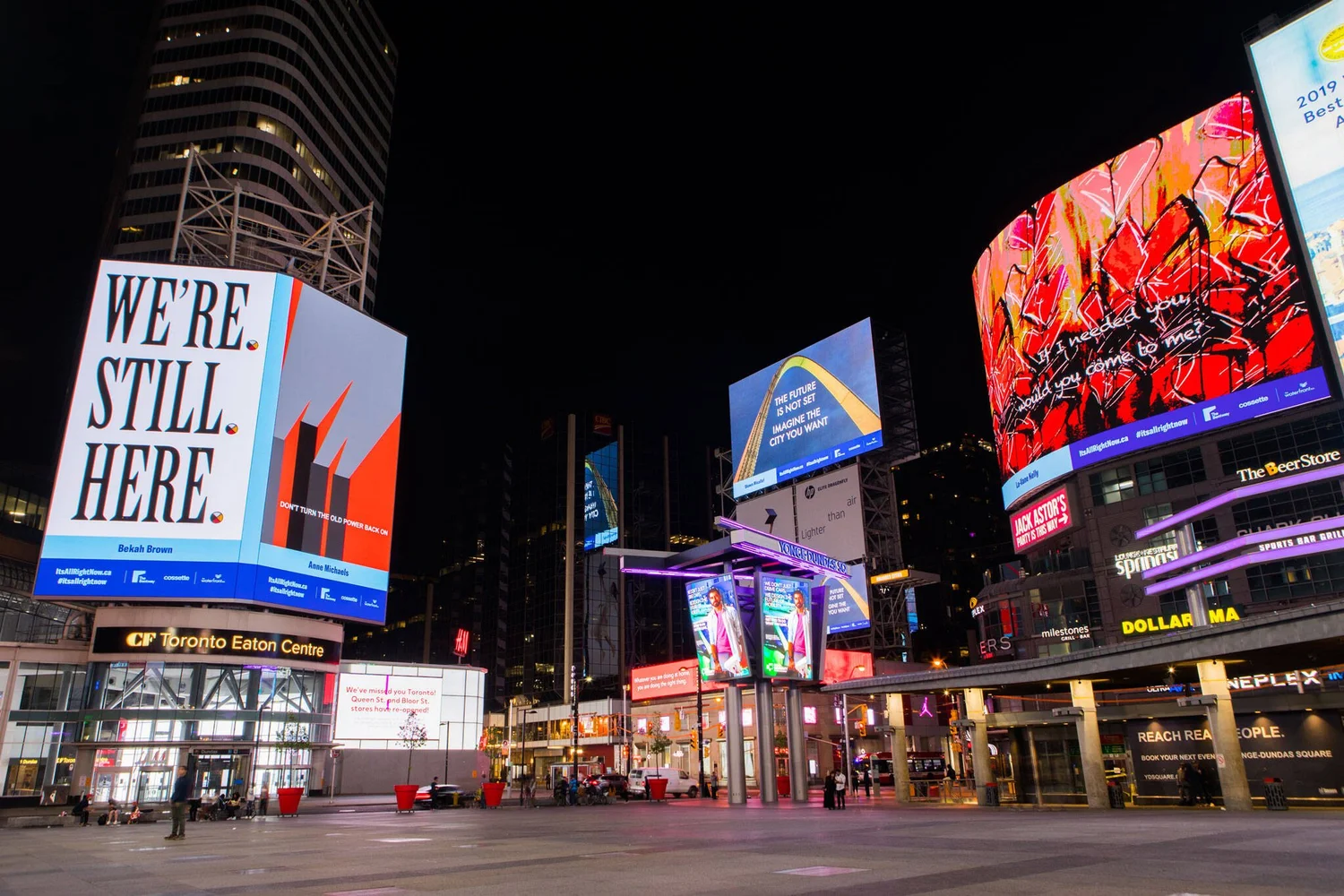
Billboards remain one of the most recognisable and commercially powerful formats in out of home advertising. They give brands the ability to occupy real-world space, reach audiences at scale and build visibility in locations where people are already travelling, shopping, commuting or spending time.
For advertisers comparing billboard formats, the first decision is rarely just about size. The stronger question is where the audience is, how they move through that environment and what kind of message will make sense in that moment. A premium roadside billboard may be ideal for broad awareness. A digital screen in a retail destination may support tactical promotions. A large-format landmark site can turn a product launch into a public statement.
Billboards also sit within a wider OOH media mix. Many brands combine roadside displays with transport and travel formats, using channels such as Airport Advertising in UK, Bus Advertising in UK, Bus Advertising in London, London underground advertising and Taxi Advertising in UK to build repeated exposure across a full customer journey.
For international and multi-city campaigns, this format choice becomes even more important. The right billboard format should reflect local audience behaviour, market maturity, creative requirements, budget and the role each location plays in the wider campaign plan.
Why Billboard Format Choice Matters
A billboard is not simply a poster at scale. Each format has a different viewing distance, dwell time, creative canvas, buying model and level of flexibility. A roadside 48-sheet may need a short, bold message that drivers can understand quickly. A digital screen in a high-footfall shopping area may support motion, sequencing and time-sensitive creative. A transport format may benefit from repeated viewing as commuters pass through the same routes each day.
Format choice affects:
- Reach and frequency
- Creative impact
- Production requirements
- Campaign flexibility
- Market coverage
- Measurement and reporting
- Cost efficiency
- Brand perception
A campaign promoting a luxury brand across major global cities may prioritise landmark digital screens and premium airport environments. A national retail campaign may use roadside billboards, bus formats and digital OOH to build high-frequency coverage around key shopping locations. A local launch may use smaller roadside or transport formats to dominate a specific catchment area.
The best campaigns rarely treat all sites equally. They build a format strategy around audience movement, local context and the specific commercial objective.
Static Billboards
Static billboards are the traditional foundation of outdoor advertising. They use printed creative displayed on fixed sites for a defined campaign period, usually across roadside, urban, retail or transport-adjacent locations.
Their main strength is consistent presence. Once live, the creative is visible day after day, creating repeated exposure among people who pass the same routes frequently. This makes static billboards especially useful for brand building, local awareness, event promotion, retail openings, public information campaigns and longer-term visibility.
Static billboards are often selected when a brand wants strong coverage without the need to change creative during the campaign. They are also effective when the design is simple, distinctive and built around one clear message.
The limitation is flexibility. Once printed and installed, creative changes require additional production and posting. For campaigns that need frequent updates, live data, countdowns, dynamic offers or multiple creative versions, digital formats may be more appropriate.
Digital Billboards
Digital billboards give advertisers greater creative and planning flexibility. Instead of printed artwork, campaigns run on LED or digital screen networks across roadside, city centre, retail, transport and landmark environments.
The advantage is adaptability. Creative can be updated quickly, scheduled by time of day, localised by market or adapted to audience context. A food delivery brand may promote lunch messaging at midday and evening offers later in the day. A travel brand may use weather-triggered messaging. A retail brand may rotate different product lines depending on store proximity or seasonal demand.
Digital formats also allow advertisers to test creative variants across different locations. This is valuable for international campaigns where messaging may need to be adapted by language, culture or local behaviour.
For larger campaigns, digital billboards can also connect with programmatic buying, helping brands activate OOH media using audience, location and contextual data. OOH International’s programmatic OOH offering is especially relevant for brands that need more agile planning across multiple markets.
6 Sheet Billboards
6 sheet billboards are smaller poster formats often found in pedestrian, retail, transport and street-level environments. They are commonly used at bus shelters, shopping centres, railway environments and urban footfall locations.
Their strength is proximity. Unlike large roadside formats, 6 sheets are often viewed at close range. This gives advertisers more room for detail, although the creative still needs to be simple and instantly readable.
6 sheets work well for:
- Retail campaigns
- Local services
- Entertainment releases
- Public sector messaging
- Event promotion
- Transport-linked campaigns
They are particularly useful when brands want to create coverage across a town, city or transport network. While one 6 sheet may not have the visual dominance of a large billboard, a well-planned network can build strong frequency and repeated exposure.
In international campaigns, 6 sheets can also support localisation. Creative can be adapted for different districts, languages or audience segments without needing the same production scale as larger sites.
48 Sheet Billboards
48 sheet billboards are one of the most widely recognised large-format billboard options. Typically positioned on main roads, arterial routes and high-traffic urban locations, they provide strong reach and visibility for drivers, passengers and pedestrians.
This format is suited to bold brand messaging. The creative needs to work at speed, often with only a few seconds of attention. Strong typography, simple imagery and a single message usually outperform complex layouts.
48 sheets are frequently used for:
- Brand awareness
- Retail launches
- Automotive campaigns
- Entertainment and streaming releases
- Property developments
- Recruitment campaigns
- Public information campaigns
They are also effective for building regional coverage. A campaign can use multiple 48 sheet locations across a city or country to create consistent presence in key commuter and consumer corridors.
For advertisers planning international activity, the 48 sheet principle has equivalents in many markets, although naming conventions, sizes and availability can vary. This is where local market expertise matters. The same creative approach may need to be adjusted for different roadside environments, traffic speeds, visibility rules and cultural expectations.
96 Sheet Billboards
96 sheet billboards offer a larger canvas than 48 sheets and are designed for high-impact visibility. They are typically placed in prominent roadside or urban locations where brands want to create stronger visual dominance.
Because of their scale, 96 sheets are effective for campaigns that rely on visual presence. Fashion, entertainment, travel, automotive and consumer brands often use these sites to create high-recognition moments in busy environments.
They can be particularly valuable when a brand needs to stand out in competitive media locations. In dense city environments, a larger format helps cut through visual noise and gives creative more weight.
The trade-off is cost and availability. Premium large-format sites are often limited, and the strongest locations may need to be booked well in advance. For brands running multi-market campaigns, planning lead times are important, especially when targeting major cities, seasonal peaks or event periods.
Mega Sites and Landmark Billboards
Mega sites and landmark billboards are built for statement campaigns. These are the large, highly visible formats associated with major roads, city gateways, shopping destinations, entertainment districts and iconic public spaces.
They are often used for:
- Product launches
- Entertainment releases
- Luxury campaigns
- Tourism promotion
- Major brand repositioning
- International awareness campaigns
The purpose is not just reach. It is stature. A landmark billboard can give a campaign cultural presence, especially when the location itself carries prestige. Sites around major urban destinations, airports, shopping centres or famous city landmarks can create visibility that extends beyond the physical audience through PR, social sharing and earned media.
For global brands, landmark formats can also support market entry. A strong site in London, Dubai, New York, Paris or another major commercial hub can signal confidence and create a sense of arrival.
The key is selectivity. Landmark sites should be chosen for strategic relevance, not just scale. A site is only valuable if the audience, location and campaign message align.
Digital Out of Home Spectaculars
Digital spectaculars are premium digital billboard formats designed for maximum visual impact. These often include large LED screens, curved displays, 3D-style creative opportunities, full-motion visuals or high-definition urban screens in major footfall locations.
They are particularly effective when creative is central to the campaign idea. Motion, depth, sequential storytelling and contextual updates can all make the format more engaging.
Digital spectaculars can be used to create memorable campaign moments, but they require stronger creative planning than static formats. A standard ad resized for a spectacular screen rarely performs as well as creative designed specifically for that environment.
For brands exploring more advanced digital formats, digital out of home advertising can provide the flexibility to combine high-impact screens with data-led planning, contextual messaging and multi-market coordination.
Roadside Billboards
Roadside billboards are built around movement. They reach drivers, passengers, pedestrians and commuters as they travel through urban and suburban environments.
Their value comes from visibility and repetition. Many people use the same routes every day, which means roadside campaigns can build frequency naturally over time. This is especially useful for brands that need awareness in specific catchments, such as retailers, property developments, universities, healthcare providers, entertainment venues or local services.
Roadside formats can range from smaller posters to large static and digital billboards. Choosing the right size depends on the road type, traffic speed, viewing angle and creative message.
A motorway or major arterial route may require bolder creative with fewer words. A city centre roadside format may allow slightly more detail because traffic moves more slowly and pedestrians may also engage with the message.
Retail and Shopping Centre Billboards
Retail environments offer strong commercial context. Audiences are already in a shopping mindset, which makes these formats useful for brands looking to influence purchase behaviour close to the point of sale.
Retail billboards may include large wall wraps, digital screens, escalator panels, entrance displays, atrium banners and car park media. These formats can support both awareness and action, particularly when linked to in-centre retailers, nearby stores or seasonal campaigns.
Shopping centre formats also offer higher dwell time than many roadside locations. People pause, queue, browse and move through repeat pathways, giving brands more opportunity to land a message.
For international campaigns, retail environments can vary significantly by market. In some countries, shopping centres are major leisure destinations. In others, high street and transit-led retail play a larger role. Media planning should account for these behavioural differences.
Transport Linked Billboard Formats
Transport environments are central to OOH because they connect brands with audiences during habitual journeys. This includes roadside sites near stations, bus shelters, airport approaches, rail hubs, taxi ranks and underground networks.
The value of transport-linked formats is that they reach people in motion. A commuter may see a roadside billboard on the way to a station, a bus side on the street, a platform poster underground and a digital screen near an office district. When planned together, these formats build a connected campaign rather than isolated media placements.
This is why transport formats often complement billboard activity. Bus Advertising in UK can extend coverage across city routes, while Bus Advertising in London can provide repeated exposure across one of the busiest urban transport environments in Europe. Similarly, London underground advertising can help brands reach commuters, tourists and city centre audiences in high-frequency travel settings.
For campaign planners, the question is not whether billboard or transport formats are better. The stronger approach is to decide how each format supports the customer journey.
Airport Billboard and Display Formats
Airports offer a premium OOH environment with a distinctive audience profile. Travellers often have higher dwell time, clear movement pathways and specific mindset states depending on whether they are arriving, departing or transferring.
Airport formats can include large digital screens, backlit displays, baggage reclaim media, walkway panels, lounge screens, terminal banners and external approach media. These are not always billboards in the traditional roadside sense, but they serve a similar high-visibility role in a controlled, high-value environment.
Airport Advertising in the UK is particularly relevant for brands targeting business travellers, international visitors, tourists, affluent consumers and globally mobile audiences. It can also support travel retail, finance, technology, luxury, education, tourism and destination marketing campaigns.
For international brands, airports are often useful gateway locations. A campaign can introduce a brand to audiences as they enter a country, move between cities or travel for business and leisure.
Taxi and Mobile Billboard Formats
Taxi advertising brings mobility into the billboard conversation. While not a fixed billboard format, taxis act as moving outdoor media, carrying brand messages through city centres, business districts, hospitality areas, transport hubs and residential neighbourhoods.
Taxi formats can include full wraps, supersides, tip seats, receipts and digital taxi screens depending on market availability. Their main advantage is flexible urban movement. They can reach audiences across multiple environments throughout the day.
Taxi Advertising in the UK is especially useful for brands that want strong city presence without relying only on fixed sites. It can also work well alongside billboards, bus formats and underground media to build multi-format visibility across a city.
Taxi media is often effective for hospitality, entertainment, finance, property, tourism, retail and app-based brands. It can also add prestige when using recognisable vehicles in markets where taxis are part of the city identity.
How to Choose the Right Billboard Format
The right billboard format depends on the job the campaign needs to do. A format should not be chosen only because it is large, digital or available. It should be selected because it supports the campaign objective.
For broad brand awareness, large roadside billboards, 48 sheets, 96 sheets and landmark sites can provide strong visibility. For flexible messaging, digital billboards and programmatic OOH may be more suitable. For local retail activation, 6 sheets, shopping centre media and roadside proximity formats can help influence audiences close to purchase. For premium audiences, airport and landmark city formats may offer better contextual value.
Campaign planners should also consider:
- Audience profile
- Viewing distance
- Dwell time
- Creative complexity
- Market coverage
- Campaign duration
- Budget
- Production timelines
- Local regulations
- Measurement requirements
For international campaigns, localisation is critical. A billboard strategy that works in London may need adjustment in Singapore, Berlin, Dubai or New York. Local traffic patterns, transport usage, language, cultural references, media ownership and regulatory rules can all affect format selection.
This is where OOH International’s role becomes valuable. The media opportunity is not just buying space. It is planning the right formats, in the right locations, across the right markets, with creative that fits the environment.
Building a Multi Format Billboard Strategy
The strongest OOH campaigns often combine several billboard and transport formats. A launch campaign might use landmark digital screens for fame, roadside billboards for reach, airport media for premium audiences, bus advertising for mobility and underground formats for commuter frequency.
This layered approach allows brands to create visibility across different journey moments. Someone may first notice the campaign on a large roadside site, see it again on their commute, encounter it near a retail destination and then recognise it later online or in-store. OOH works particularly well when it creates this sense of repeated public presence.
A multi-format strategy can also help balance cost and impact. Premium landmark sites can provide standout moments, while broader networks of smaller formats build frequency. Static sites can hold long-term presence, while digital screens provide flexibility around timing and creative rotation.
For brands planning across several cities or countries, consistency and localisation need to work together. The campaign should feel recognisable everywhere, but not identical in a way that ignores local context.
Planning Billboard Campaigns with International Scale
Billboard campaigns become more complex when they cross borders. Availability, format naming, buying models, print specifications, digital requirements and proof-of-posting processes can all vary by market.
An international campaign needs a clear planning framework:
First, define the business objective. Is the campaign designed to launch a product, drive retail footfall, increase brand fame, reach travellers or support market entry?
Second, identify priority audiences and movement patterns. Are they commuters, tourists, business travellers, shoppers, students, drivers or affluent urban consumers?
Third, select formats based on context. A roadside format may be best for reach, an airport display for premium positioning, a digital spectacular for fame and a bus or taxi format for citywide movement.
Finally, localise creative and delivery. Language, imagery, legal requirements and cultural nuance all matter. A strong global campaign should travel well, but it should still feel relevant in each location.
OOH International supports brands and agencies in navigating this process, from format selection and market planning to campaign activation and reporting. For advertisers exploring global or UK opportunities, the right next step is to discuss campaign objectives, audience priorities and market selection before committing to specific formats.
FAQs
What are the main types of billboard formats?
The main types of billboard formats include static billboards, digital billboards, 6 sheets, 48 sheets, 96 sheets, mega sites, landmark billboards, retail displays, roadside formats and transport-linked displays. The best option depends on audience, location, campaign duration, budget and creative requirements.
Are digital billboards better than static billboards?
Digital billboards are better when a campaign needs flexibility, motion, contextual messaging or creative rotation. Static billboards are often better for consistent long-term presence and simple brand awareness. Many campaigns use both to balance impact, frequency and cost efficiency.
How does Airport Advertising in the UK support billboard campaigns?
Airport Advertising in the UK supports billboard campaigns by reaching travellers in premium, high-dwell environments. Airport formats can complement roadside and city media by connecting with business travellers, tourists and internationally mobile audiences.
Can Bus Advertising in London work alongside billboard formats?
Yes. Bus Advertising in London can extend billboard campaigns across the city by adding mobility and repeated street-level visibility. It works particularly well when combined with roadside billboards, underground formats and digital OOH.
What billboard format is best for international campaigns?
There is no single best format for every international campaign. Large roadside billboards and landmark digital screens are strong for awareness, while airports, taxis, buses and underground media can reach specific audiences and journey moments. The right choice depends on market behaviour, campaign objectives and local media availability.